Meshr: The simplest way to connect your devices
After years of wrestling with infrastructure, servers, and networking, I kept hitting the same wall: connecting two devices securely is simple in theory and a real headache in practice. No static IP, you're stuck behind NAT, you don't want to open ports, the VPN setup eats half a day — and then you have to explain the whole thing to everyone on your team.
That's exactly why I built Meshr.
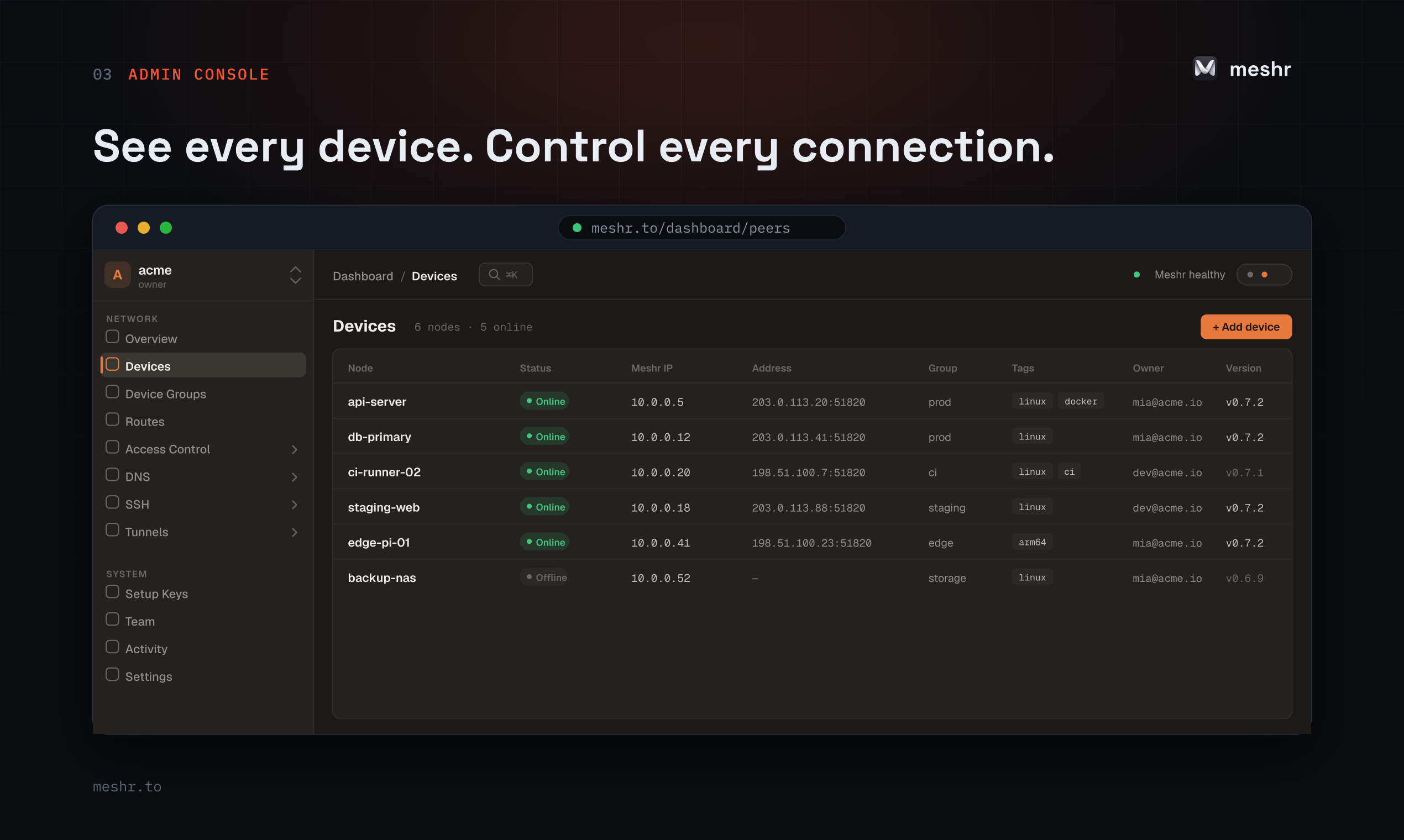
What does Meshr do?
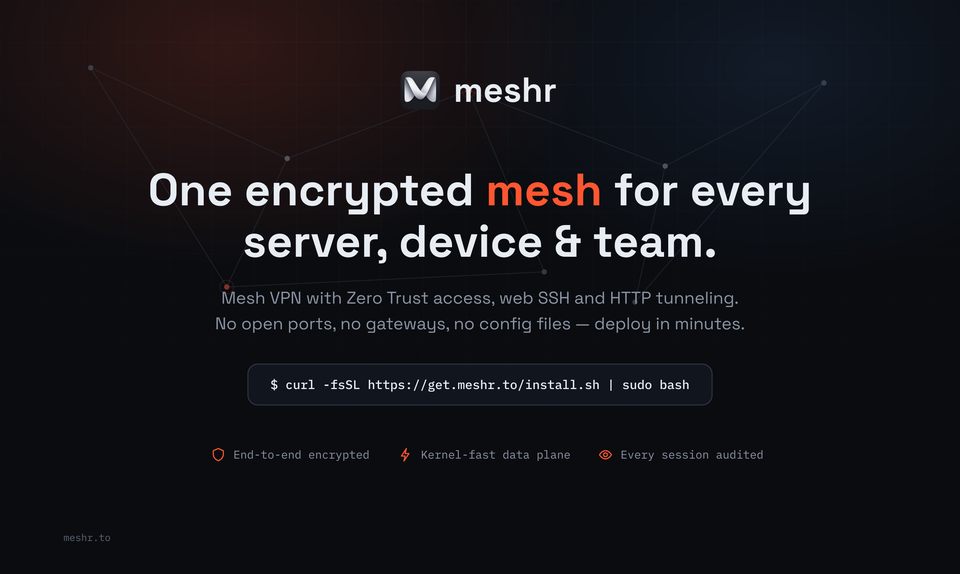
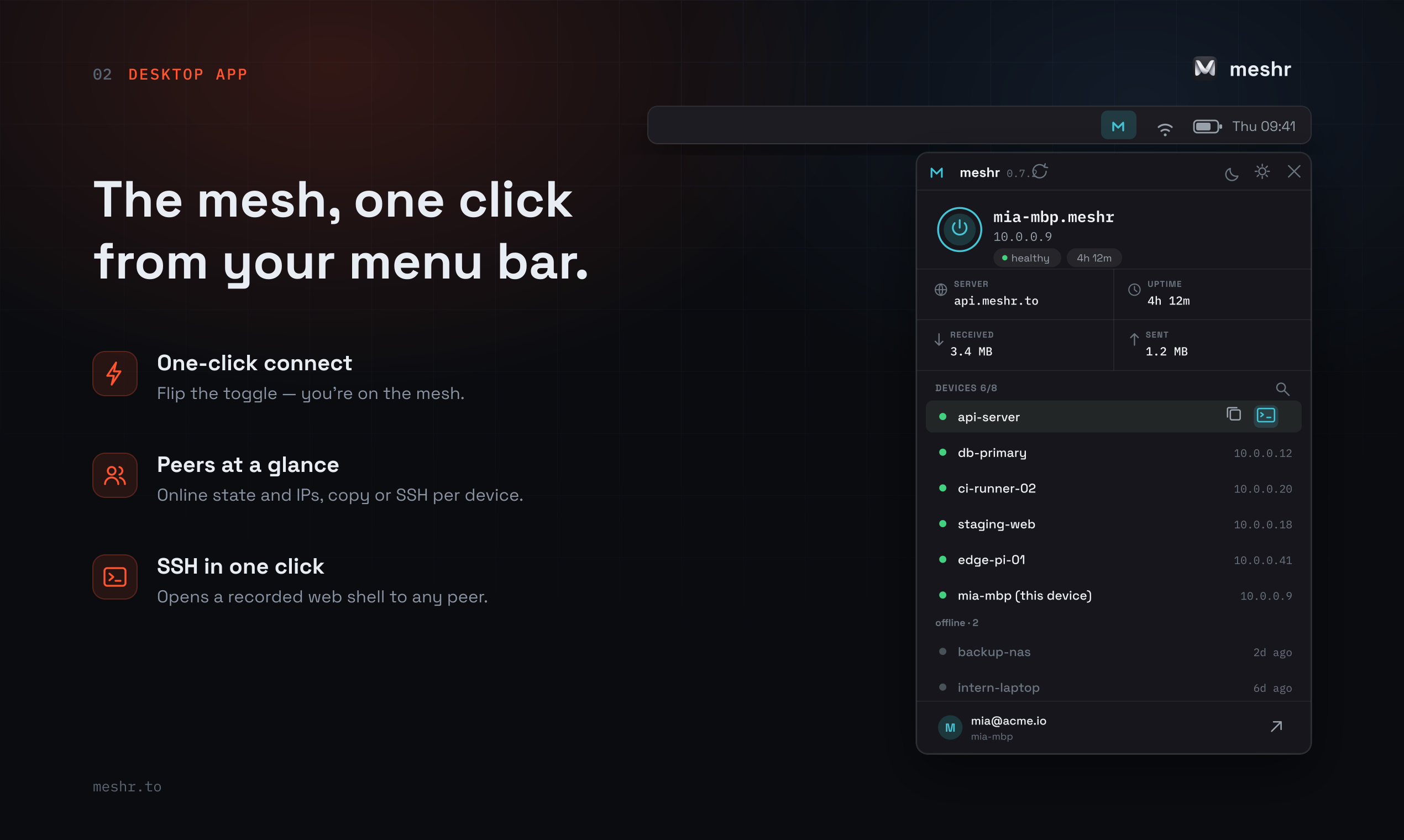
Meshr is a mesh networking platform built on WireGuard and the Zero Trust principle. Put simply: it connects your devices — your laptop, your server, your phone, your IoT device — into a single private network no matter where they are, as if they were sitting right next to each other.
- No static IP required.
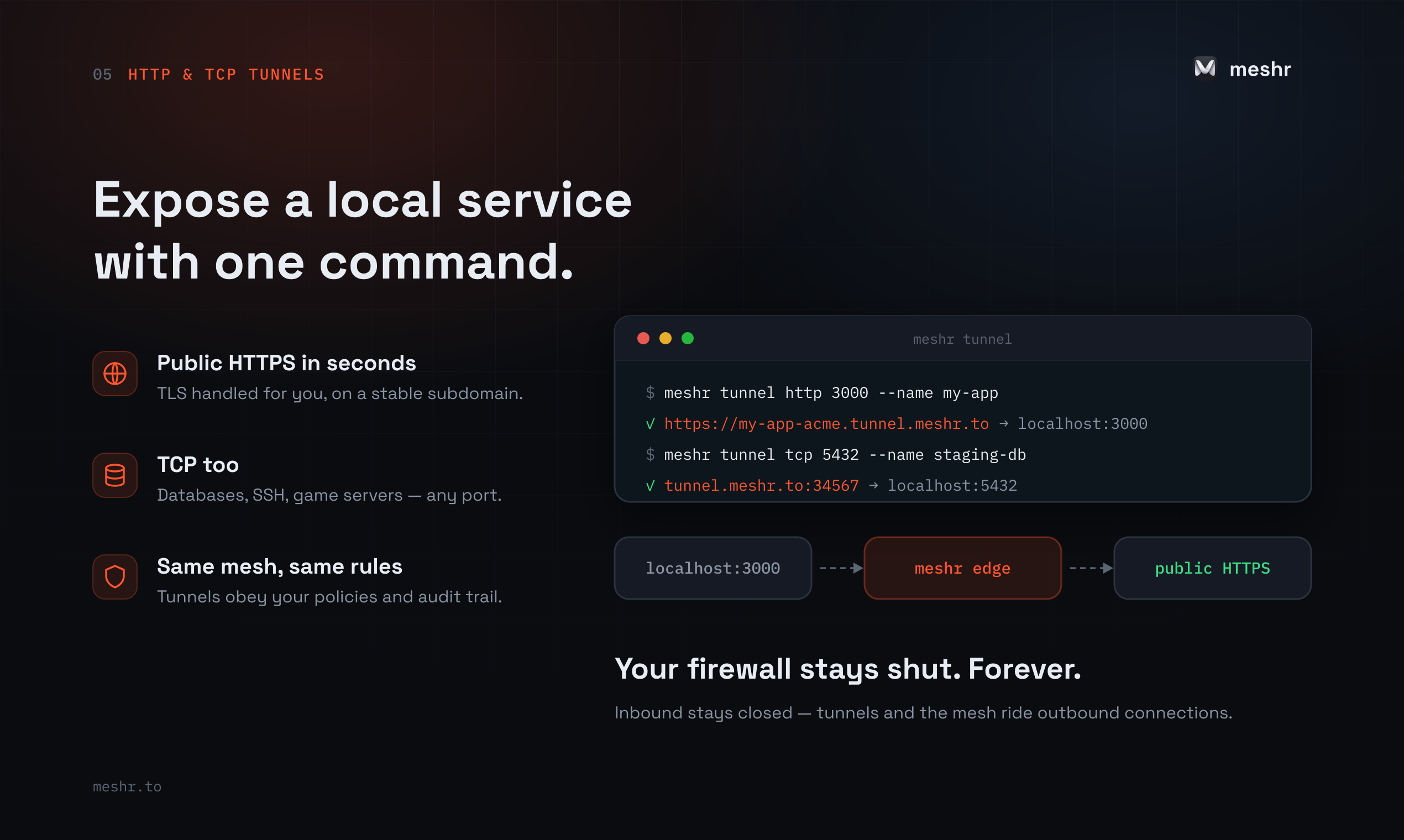
- No opening ports, no fiddling with firewalls.
- It doesn't matter if you're behind NAT; devices find each other.
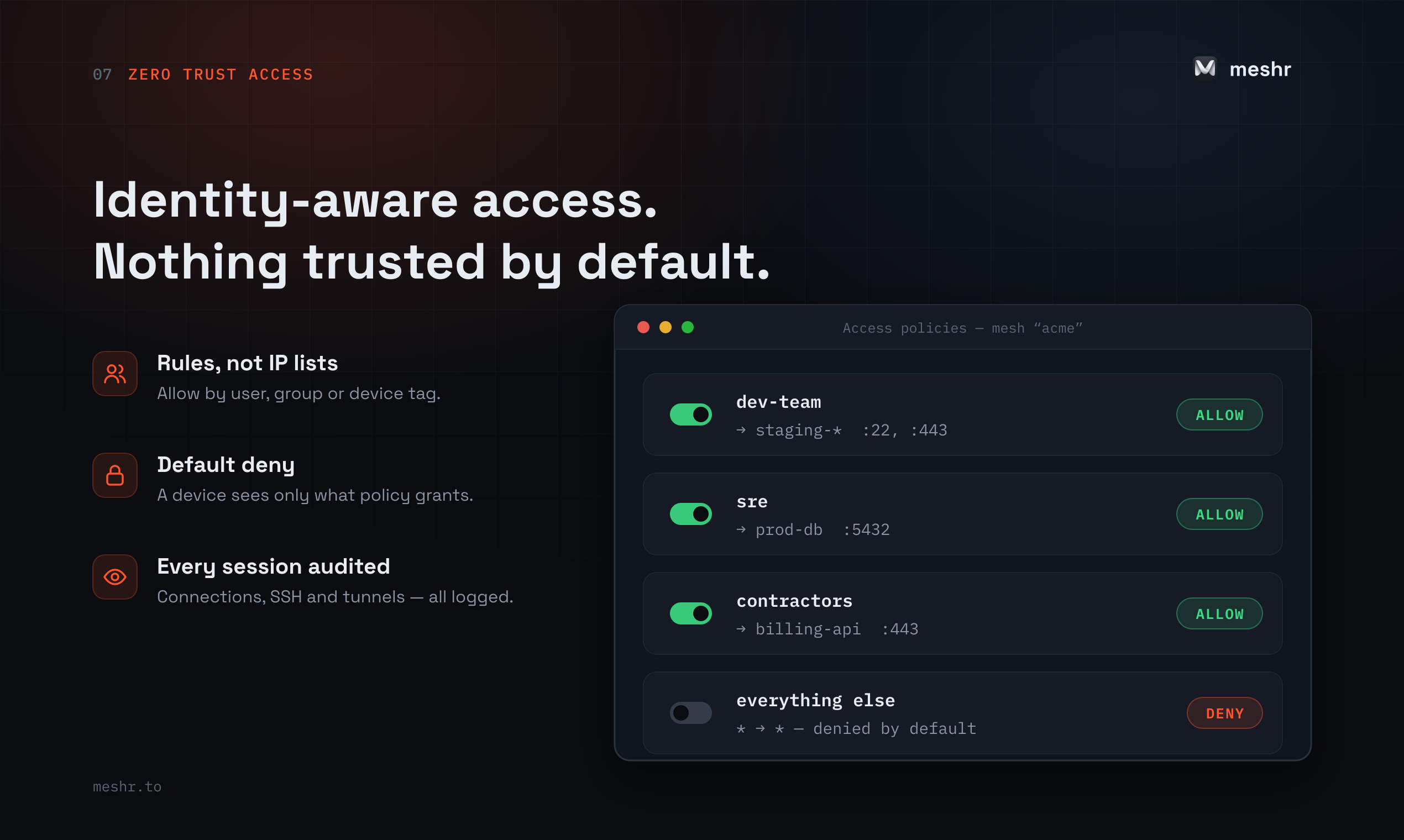
- Every connection is encrypted and authenticated. There's no "trust everyone on the inside" — it's Zero Trust.
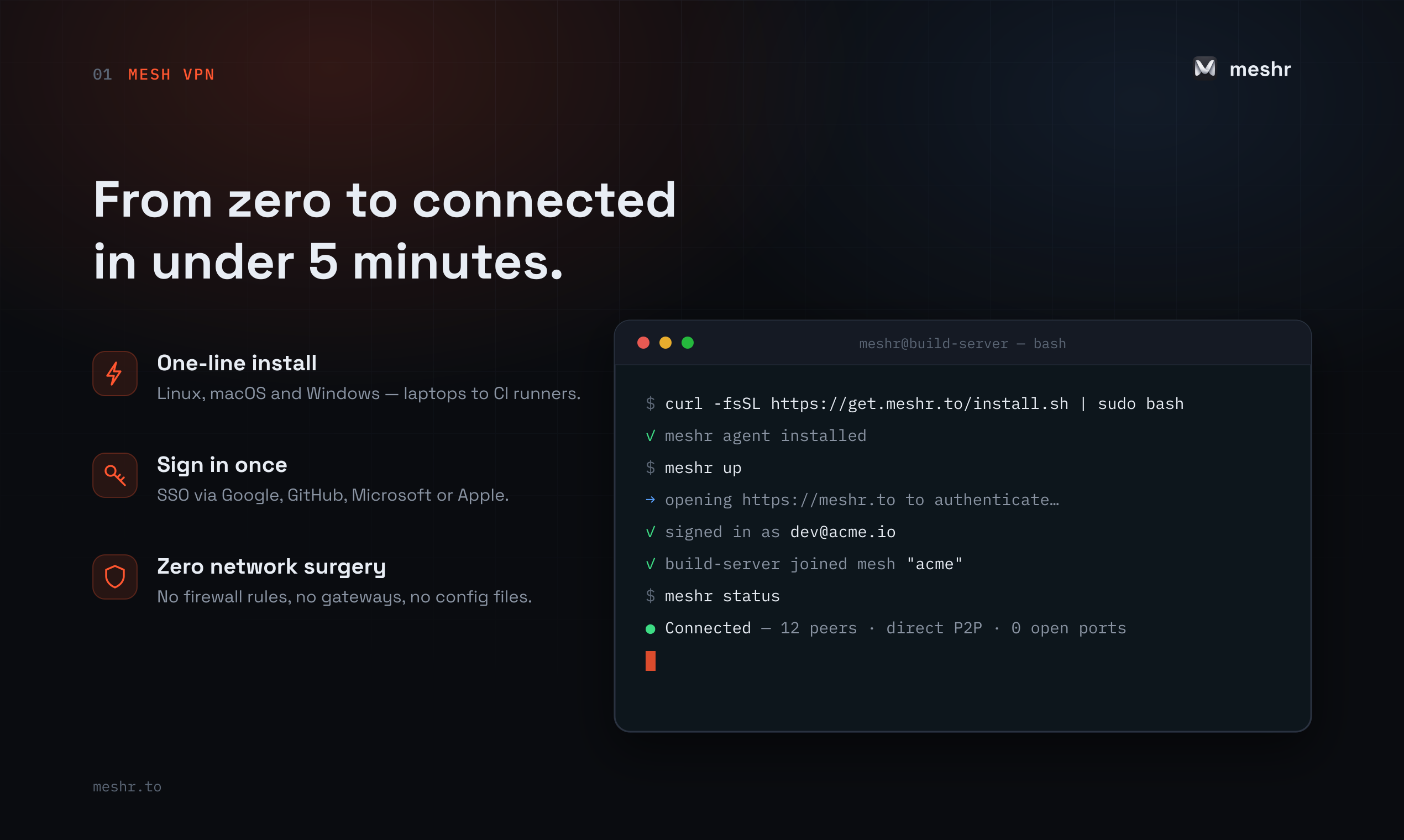
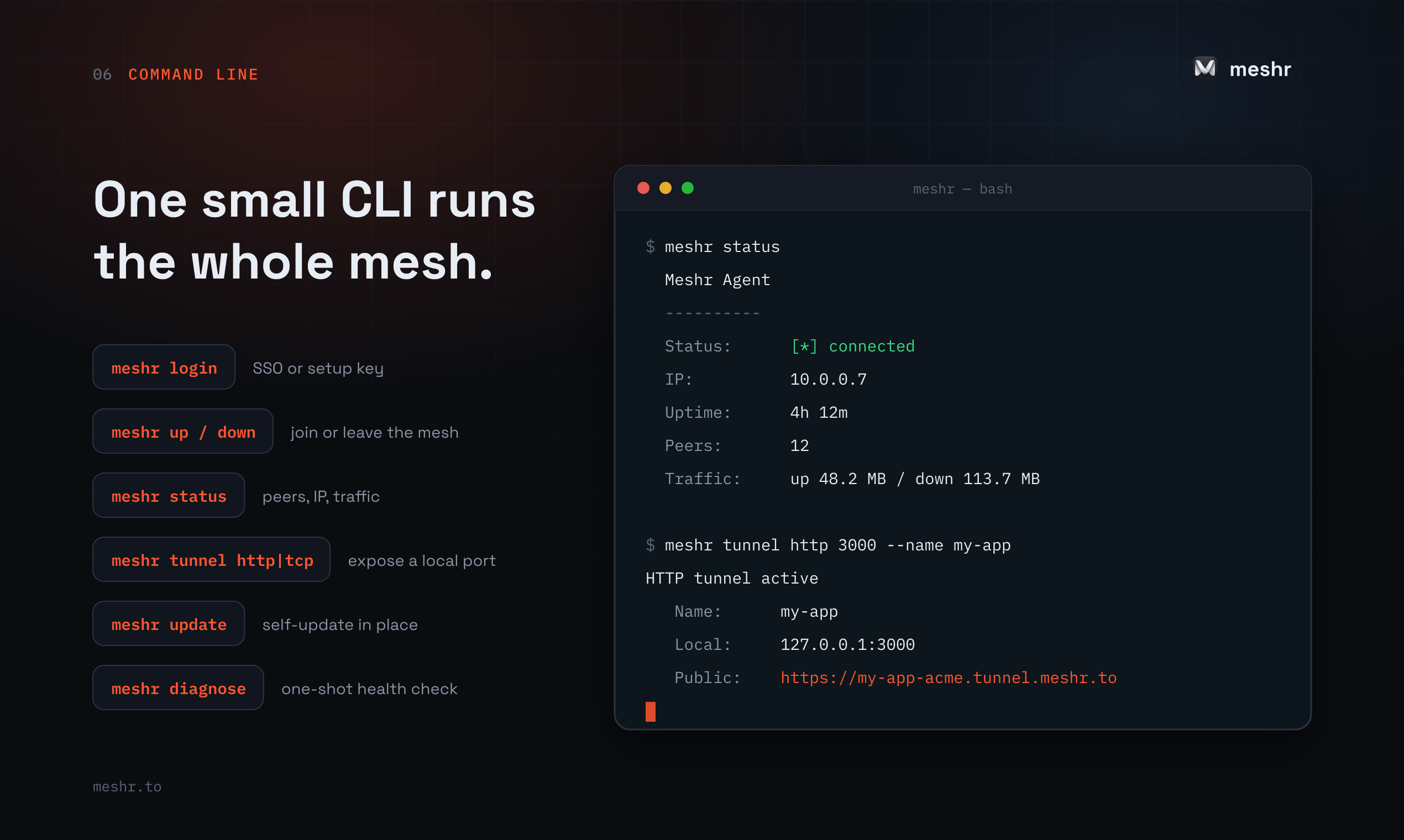
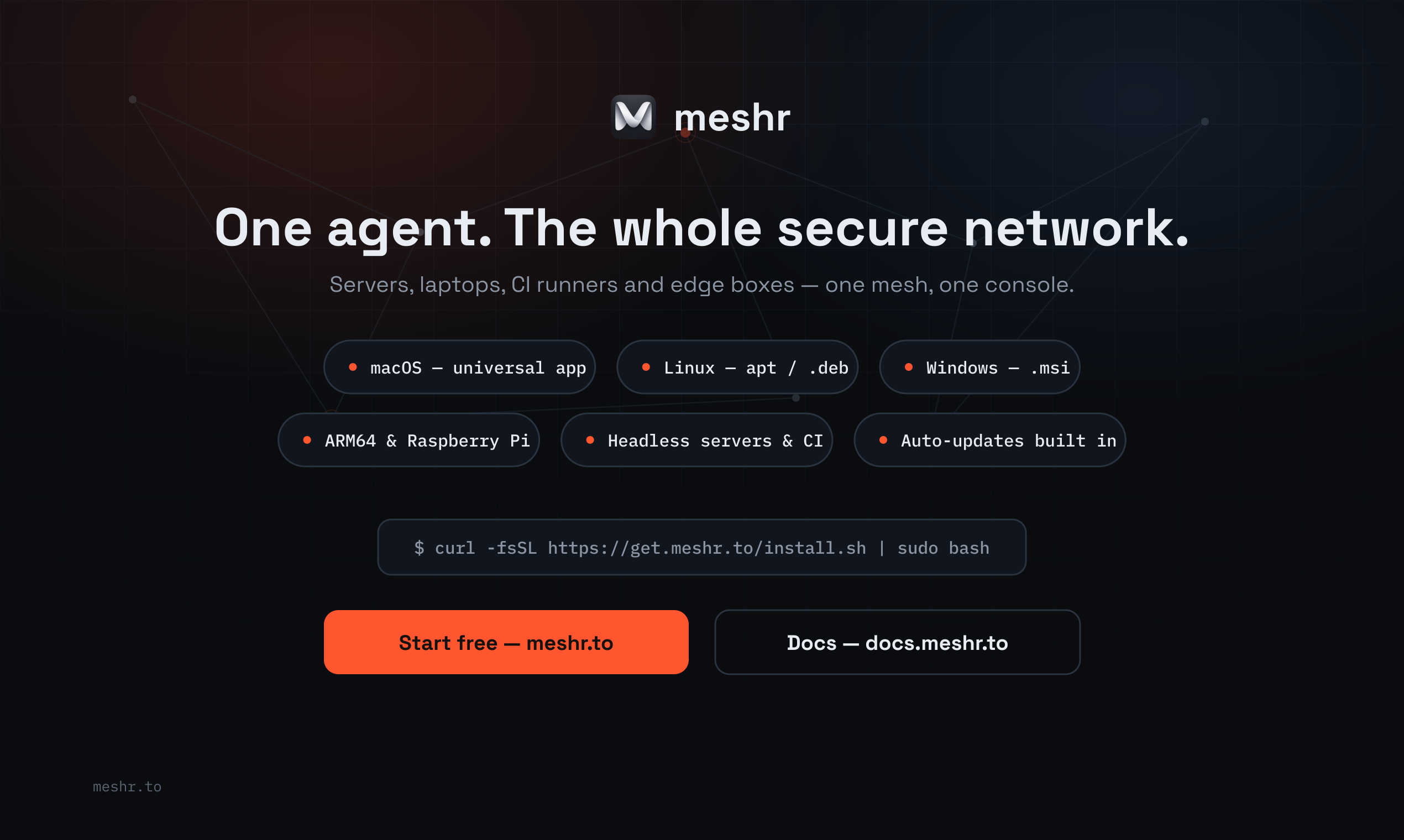
Setup takes a few minutes. You install the client on the device, it joins the network, and you're done.
A perfect fit for edge devices
One of the scenarios I thought about most while building Meshr was edge devices. Hundreds of devices you've deployed into the field — behind NAT, with no static IP, physically out of reach. Managing them the traditional way is a genuine nightmare.
This is where Meshr shines. With its lightweight, low-footprint client, it runs smoothly across a wide range of hardware, from ARM-based boards to industrial gateways. You set the device up, drop it into the field, and it automatically joins your network wherever it is — so you can reach it remotely with ease. Management doesn't get more complex as your fleet grows; every new device joins the network on its own.
As someone who works on the embedded and IoT side, I designed this scenario from my own experience — it's not a "nice to have" feature bolted on after the fact.
Meshr Intro
On security
At the core of Meshr is a Zero Trust approach. There's no "you got into the network once, so now you can reach everything" logic. Every device's identity is verified, every connection is encrypted, and no device can reach a resource it isn't entitled to by default.
The infrastructure is built on modern, battle-tested WireGuard — a lightweight, fast, auditable encryption layer. Because you don't leave open ports and don't expose devices directly to the internet, your attack surface shrinks from the start. The single-point-of-failure risk you often see in classic VPNs — "if the central server goes down, everything stops" — is also largely mitigated by the mesh structure.
Here's the interesting part: the kind of fine-grained access restrictions that large companies struggle to set up even with their hundred-thousand-dollar firewalls, you can configure with Meshr in minutes. You define the answer to "which device can reach which resource, under which conditions" without buying a hardware box or wrestling with convoluted rule sets. An expensive firewall gives you a wall at the perimeter; Meshr brings every single connection inside the network under control.
In short, security isn't a layer patched on afterward — it sits at the foundation of the architecture.
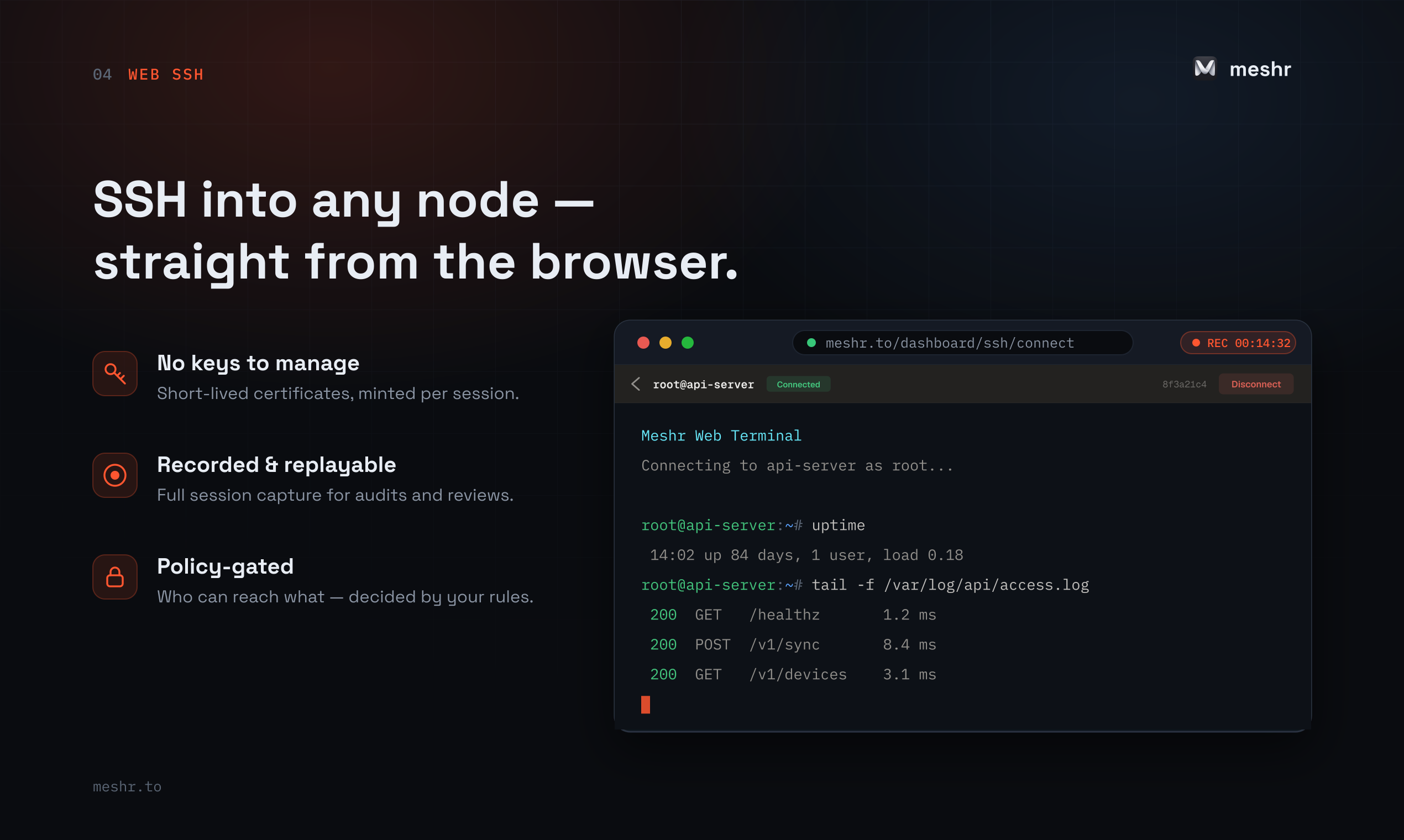
SSH Connection and Records
Why I built it
Honestly, it grew out of my own need. I work across multiple products and servers — production machines, build servers, remote devices. Every solution I used to reach them securely was either too complex, too expensive, or wanted me to hand over control entirely to someone else.
I started building it for myself. Then I realized the problem wasn't just mine — solo founders, small teams, homelab enthusiasts, anyone managing devices in the field all share the same pain. So I figured if I'm building it for myself, I might as well build it in a way everyone can use.
I tried hard to keep Meshr simple. I set out with one goal: "a networking tool you can use without being a network engineer."
Who is it for?
- Solo founders and small teams: Secure team-wide access to your servers and services.
- Remote / out-of-office workers: Secure, simple access to company resources wherever they are — without the corporate VPN struggle.
- Developers: Effortless connection to remote machines, build environments, and staging servers.
- Homelab users: Secure access to your home devices from anywhere.
- Field device operators: Reaching remote devices behind NAT.
What's coming soon?
Meshr is still early, and I'll be adding plenty of new features in the coming period. I'm shaping the roadmap together with user feedback, so what's listed here will keep growing.
One of the things I'm most excited about: self-hosting is coming very soon. That means you'll be able to run Meshr on your own infrastructure, on your own server, fully under your own control. For teams and organizations that want complete sovereignty over their data and network, this will be a big step.
If there's a feature on your mind, tell me — I'm genuinely listening.
Pricing
Right now, Meshr is completely free during the beta. No card details, no imposed limits — use it, try it, and tell me what you think.
Pro membership is permanently free for students and academics. I wanted to remove the barrier upfront for anyone who wants to learn, experiment, and build projects.
And here's something I cared about in particular: no confusing bundles, no nonsense limits. I worked to make sure you never get worn out trying to figure out which feature lives in which plan. The goal is simple — let everyone use it comfortably.
Web: https://meshr.to
Support us on Product Hunt 🚀
We launched Meshr on Product Hunt today. If you read this far and the idea resonated with you, an upvote means a lot. As an independent developer, the biggest support I get comes from the community.
👉 Support Meshr on Product Hunt
I'd love to hear your comments, your feedback, and every "it'd be awesome if it also did this" you've got. If you have any questions, feel free to reach out.
Thanks, Savaş